
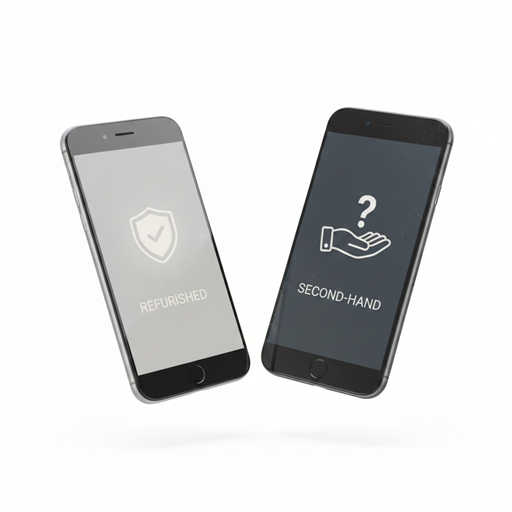
Refurbished vs second-hand phones: which option is safer to buy?
Buying a high-end smartphone doesn’t always have to mean paying a four-figure price tag. In 2026, the market for pre-owned tech is booming, but it has also become more complex. Most buyers find themselves at a crossroads: Refurbished vs. Second-Hand.
While these terms are often used interchangeably, they represent two very different levels of risk, quality, and protection. If you are asking which is safer, the short answer is refurbished. However, the “why” involves critical details about battery health, security, and consumer rights that could save you hundreds of dollars.
What Is a Refurbished Phone?
A refurbished phone is a device that was previously owned but has been professionally restored to a functional state.3 These devices are usually sourced from trade-ins or corporate leases and are sold by specialized retailers or the original manufacturers (like Apple or Samsung).
The Refurbishment Process:
- Multi-Point Inspection: Technicians test everything from the touchscreen and cameras to the internal sensors and charging ports.
- Repairs: Any faulty parts (e.g., a cracked screen or a degraded battery) are replaced with functional ones.
- Data Wiping: Professional software is used to ensure the previous owner’s data is permanently erased.
- Grading: Devices are assigned a “grade” (e.g., Pristine, Very Good, Good) so you know exactly what to expect regarding cosmetic wear.
What Is a Second-Hand (Used) Phone?
A second-hand phone is typically sold “as-is” by an individual through marketplaces like eBay, Facebook Marketplace, or Craigslist.
There is no middleman and no professional inspection. You are essentially taking the seller’s word that the phone works. While these are often the cheapest options, they come with no guarantees of performance or longevity.
Refurbished vs. Second-Hand: The Safety Comparison
To help you decide, here is how the two options stack up across the four most important “safety” categories.
1. Warranty and Returns (The Safety Net)
- Refurbished: Most reputable retailers offer a 6 to 12-month warranty. If the motherboard fails or the screen glitches after three months, you are protected.
- Second-Hand: Once the cash changes hands, the transaction is usually final. If the phone dies the next day, you have almost zero legal recourse.
2. Battery Health
- Refurbished: Professional refurbishers usually guarantee a minimum battery capacity (often 80% or higher). If the battery is below that threshold during testing, it is replaced.
- Second-Hand: You might inherit a battery that has been through 1,000 charge cycles. A phone that looks “mint” on the outside could have a battery that drains in three hours.
3. Security and IMEI Status
- Refurbished: Retailers verify the IMEI (International Mobile Equipment Identity) to ensure the phone hasn’t been reported stolen or blacklisted. They also ensure the device is not “Cloud-locked” (Activation Lock).
- Second-Hand: There is a high risk of buying a stolen device. Even if it works today, a carrier could blacklist the IMEI a week later, turning your “bargain” into a paperweight.
4. Hidden Damage
- Refurbished: Technicians check for water damage and internal corrosion.
- Second-Hand: A seller might hide the fact that the phone was dropped in a sink. It might work for a few days, but internal oxidation will eventually kill the device.
Quick Comparison Table
| Feature | Refurbished Phone | Second-Hand (Used) |
| Inspection | Professional 30-90 point check | None (Seller’s word) |
| Warranty | 6 – 12 Months | None |
| Return Policy | Usually 14 – 30 days | Rare / Non-existent |
| Battery | Guaranteed 80%+ health | Unknown / Potentially degraded |
| Security | IMEI checked & Data wiped | Risk of stolen/blacklisted |
| Price | Affordable (30-50% off retail) | Cheapest (Highest risk) |
Which Option Should You Choose?
Choose Refurbished If:
- You want a reliable daily driver for the next 2–3 years.
- You need the peace of mind of a warranty.
- You are buying for a child or a student who needs a dependable device.
- You want to support a more sustainable “circular economy” with professional oversight.
Choose Second-Hand If:
- You are on an extremely tight budget and can afford to lose the money if it fails.
- You are tech-savvy enough to perform your own diagnostic tests before buying.
- You are buying from a trusted friend or family member.
Pro-Tips for Buying Safely in 2025
- Check the “Release Date”: In 2025, ensure the phone still supports the latest OS (iOS or Android) to receive critical security updates.
- Ask for the IMEI: Before meeting a private seller, ask for the IMEI and run it through a free online “Blacklist Checker.”
- Buy “Certified”: Look for “Manufacturer Refurbished” (e.g., Apple Certified Refurbished) for the highest quality, as they often include a brand-new battery and outer shell.
Final Verdict
For the vast majority of people, refurbished is the safer and smarter choice. While you might save an extra $50 buying directly from a stranger, the risk of hidden defects, stolen status, or a dying battery far outweighs the minor savings.
If you want a device that looks, feels, and performs like new without the high-street price tag, you should always opt for refurbished phones UK from a trusted, certified source.
Frequently Asked Questions
1. Is a refurbished phone essentially just a “used” phone?
Technically, yes, both have had previous owners. However, the difference lies in the restoration. A used phone is sold “as-is” with all its potential faults. A refurbished phone has been professionally inspected, cleaned, and repaired. In the tech industry, “refurbished” implies a standard of quality and a functional guarantee that “used” simply does not offer.
2. Will the battery life be bad on a refurbished device?
Not usually. Most reputable refurbishers (like Apple, Samsung, or Back Market) test batteries to ensure they have at least 80% to 90% of their original capacity. If a battery is below that threshold, it is typically replaced with a brand-new one before the phone is listed for sale. With a second-hand phone, you have no such guarantee.
3. Can I still get software updates on an older refurbished phone?
Yes, but it depends on the model. A refurbished phone receives the same software and security updates as a new one. However, every phone has a “shelf life” for updates. In 2025, if you buy a refurbished iPhone 13 or Galaxy S22, you’ll likely have several years of support left. Always check the manufacturer’s end-of-support date before buying.
4. What happens if the phone I buy is reported stolen?
This is a major risk with second-hand private sales. If a phone is reported stolen, the carrier will blacklist the IMEI, and the phone will no longer connect to any network. Professional refurbishers run every device through a “CheckMEND” or similar database to ensure the phone has a clean history, making it the much safer choice for avoiding legal or connectivity issues.
5. Is buying refurbished actually better for the environment?
Absolutely. Buying a refurbished phone is one of the most eco-friendly tech choices you can make. It extends the lifecycle of a device, reducing the demand for raw material mining (like lithium and cobalt) and preventing toxic e-waste from entering landfills. By choosing refurbished over new or poorly maintained second-hand units, you are directly contributing to a circular economy.